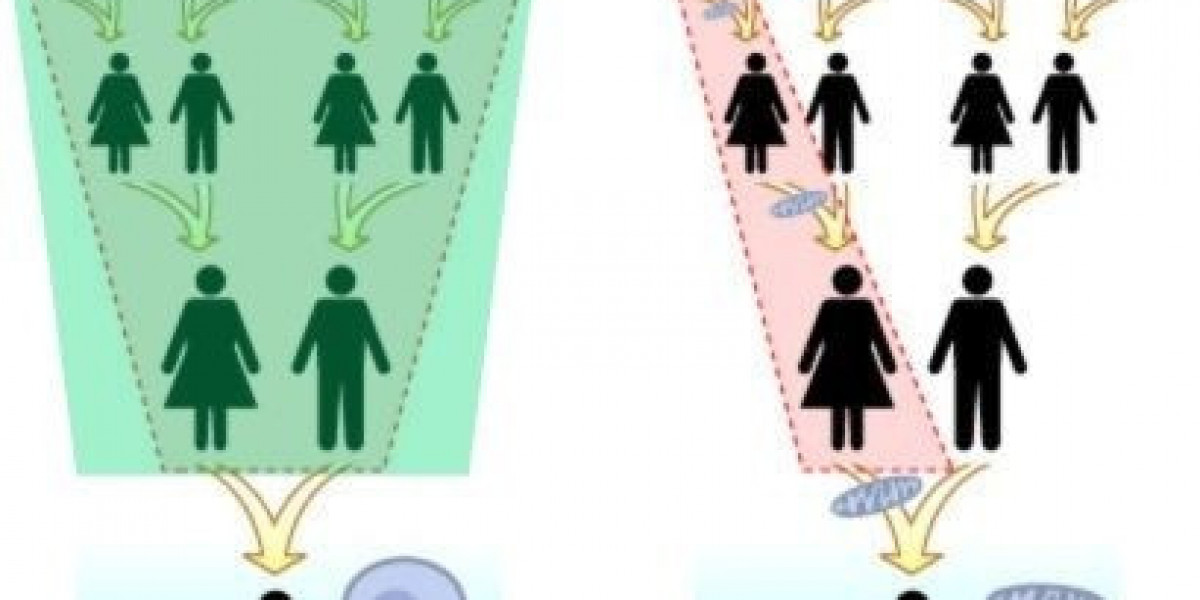
When individuals discuss family characteristics, they usually consider such aspects as hair texture or eye color. But that is far more complicated with genetics. Scientists have discovered that some traits come specifically through genes inherited from mother only, and these genes follow a unique pattern of inheritance that is different from most other genetic material.
This topic is closely connected to the idea of maternal lineage, which traces a person’s direct line through their mother’s side of the family. With the help of mitochondrial DNA testing, researchers and families can now explore this line in greater detail. This is one of the ways one can understand why some traits and conditions are especially inherited by mothers from their children.
The Natural Process of Genetic Inheritance
A child will, in most instances, inherit half his/her DNA from the mother and the other half from the father. This DNA information is contained within the chromosomes within the nucleus of every cell. These mixed genes control the physical appearance, shape, personality inclinations, and contribute to general health.
Although the majority of genes are inherited from two parents, exceptions do exist. Not all genetic material is contributed equally. This is where genes inherited from mother only become important, as they are passed down in a way that does not involve the father at all.
The Mitochondrial DNA Special Role
Within almost all cells in the human body are small bodies known as mitochondria. These are the ones that generate the energy that our bodies require to operate. Mitochondria contain their own DNA, which is independent of the main DNA found in the nucleus, unlike other sections of the cell.
This is a female-only mitochondrial DNA. In the period of fertilization, the embryo does not inherit the father's mitochondria. Because of this, mitochondrial DNA is one of the clearest examples of genes inherited from mother only, and it remains largely unchanged as it passes from one generation to the next.
Why Only Mothers Pass It On?
This is because only mothers transfer mitochondrial DNA, and this is based on fundamental biology. During the fertilization of an egg by a sperm cell, it is mainly the sperm that provides the nuclear DNA. The mitochondria within the sperm are usually destroyed and fail to form a part of the developing baby cells.
Consequently, each and every child inherits mitochondrial DNA from the mother, yet only daughters are able to transmit it to their descendants. This direct line of inheritance forms a continuous chain that defines a person’s maternal lineage, connecting them to their mother, grandmother, and many generations before them.
Health Disorders Associated with Maternal Heredity
Since the mitochondria have a role to play in energy production, alterations in mitochondrial DNA may impact organs with high energy requirements, including the brain, heart, and muscles. In case of mutations, they may cause some medical disorders mentioned as mitochondrial disorders.
When a mother has a mutation in her mitochondrial DNA, she is able to transmit it to all her children. This makes certain illnesses an example of how genes inherited from mother only can directly influence family health patterns, sometimes appearing across several generations.
Discovering Lineage with Maternal DNA
Mitochondrial DNA is studied by evolutionary scientists who are interested in the origin of humans and their patterns of migration. This DNA is difficult to change with the passage of time; hence, it is an effective method of tracing the family relations in ancient times. This has assisted the researchers in knowing the way in which populations moved and settled in the world.
Today, many people choose mitochondrial DNA testing to learn more about their roots and ancestral background. This kind of test is also limited to the maternal line, and it provides information on the heritage that may not present itself in other types of genetic testing. You can get this test done at DNA testing lab in Indiana. This respective lab is accredited by AABB and also approved by the court for its accurate findings.
Conclusion
Learning about genes inherited from mother only gives us a deeper understanding of how unique maternal inheritance truly is. Although the majority of our qualities are inherited through both parents, mitochondrial DNA is the exception since it is exclusively inherited on the female side.
By studying maternal lineage and using tools such as mitochondrial DNA testing, families can uncover meaningful information about both ancestry and health. This information not only clarifies some of the inherited diseases but also forms a bond that most people have with their maternal identity.