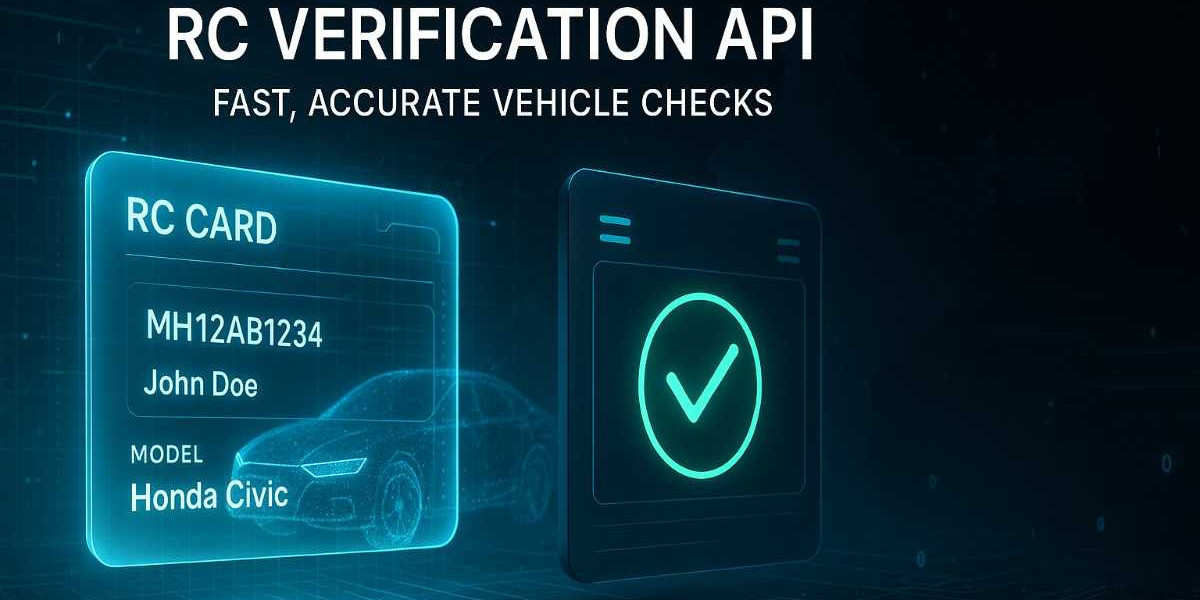
Fleet management today is no longer limited to tracking vehicles and assigning routes. It has evolved into a complex operational function that directly impacts cost efficiency, compliance, safety, and business scalability. As fleets grow in size and geography, maintaining accurate vehicle data becomes increasingly difficult.
Many fleet operators still rely on manual RC checks, document uploads, and periodic audits to manage compliance. These methods slow down operations and create blind spots that lead to avoidable expenses. This is why RC Verification API for smart fleet management has become a critical tool for companies focused on cost control and operational efficiency.
By validating vehicle Registration Certificate (RC) details in real time, businesses can manage fleets more intelligently while preventing financial leakage.
What Is RC Verification in Fleet Management?
RC verification is the process of validating a vehicle’s registration details to confirm that it is legally registered, correctly classified, and eligible for operational use. An RC Verification API performs this check digitally using the vehicle registration number.
Instead of depending on uploaded RC copies or manual review, the API fetches verified vehicle data instantly. This enables fleet managers to make fast, data-backed decisions across onboarding, compliance, and daily operations.
Why Fleet Cost Control Starts with Accurate Vehicle Data
Fleet costs are often driven by issues that originate from inaccurate or outdated vehicle information. When RC data is incorrect, businesses face:
Insurance premium mismatches
Regulatory penalties
Rejected claims
Vehicle downtime
Contractual disputes
Without real-time RC verification, these costs remain hidden until they escalate into larger operational problems.
Challenges with Manual Fleet RC Management
Manual RC management does not scale with growing fleets. Common challenges include:
Outdated RC documents stored in systems
Incorrect vehicle classification
Delayed compliance checks
Inconsistent verification across regions or vendors
High dependency on manual audits
These inefficiencies increase operational overhead and reduce visibility into fleet health.
How RC Verification API Enables Smarter Fleet Management
RC Verification API automates the validation of vehicle data at every critical point in the fleet lifecycle.
By using the API, fleet operators can:
Instantly verify vehicle registration status
Confirm vehicle category and usage eligibility
Detect inactive or deregistered vehicles early
Eliminate document-based delays
This automation allows fleet teams to focus on optimization rather than paperwork.
Key Fleet Compliance Checks Enabled by RC Verification API
Registration Status Validation
Ensures that only active and legally registered vehicles operate within the fleet. This reduces regulatory and legal risk.
Vehicle Classification Check
Confirms that vehicles are correctly classified for their operational use, which is critical for insurance and contract compliance.
Vehicle Age and Registration Date
Supports decisions around maintenance, replacement planning, and risk assessment.
Ownership Consistency
Reduces disputes by ensuring vehicle records align with declared ownership information.
Reducing Fleet Costs Through Proactive Verification
Many fleet-related costs are reactive. Vehicles are grounded after audits, claims are rejected after incidents, and penalties are imposed after inspections.
RC Verification API shifts fleet management from reactive correction to proactive prevention. Vehicles that fail compliance checks are identified before they cause downtime or losses.
Improving Insurance and Claims Outcomes
Insurance is a major fleet expense. Claims are often rejected due to RC mismatches, incorrect vehicle classification, or outdated registration data.
By verifying RC details in real time, fleet operators ensure that:
Insurance records match verified vehicle data
Claims are supported with accurate documentation
Disputes are reduced during settlement
This directly improves claim success rates and long-term insurance costs.
Supporting Scalable Fleet Operations
As fleets expand across cities and vendors, maintaining uniform compliance becomes difficult.
RC Verification API ensures:
Consistent verification standards across locations
Faster onboarding of new vehicles
Reduced dependency on regional compliance teams
This enables scalable growth without compromising control.
Strengthening Vendor and Partner Accountability
Many fleets rely on third-party vehicle owners or vendors. Without proper verification, non-compliant vehicles can enter operations unnoticed.
RC verification enforces accountability by validating vehicle details before vendor vehicles are approved. This protects fleet operators from downstream risk while maintaining partner discipline.
Data Accuracy Across Fleet Systems
Fleet data flows across dispatch, billing, insurance, compliance, and analytics systems. Inaccurate RC data creates inconsistencies and reporting errors.
RC Verification API provides standardized and verified vehicle data that improves data integrity across platforms. This leads to better reporting and cost analysis.
Audit Readiness and Regulatory Confidence
Fleet audits often require proof that vehicles were compliant at specific points in time.
RC verification generates structured, time-stamped validation records that support audit readiness and reduce compliance stress.
Long-Term Cost Benefits of RC Verification API
While RC verification may appear as a compliance tool, its long-term value lies in cost control.
Benefits include:
Fewer regulatory penalties
Lower insurance disputes
Reduced vehicle downtime
Better asset utilization
Improved operational predictability
These savings compound as fleet size increases.
Conclusion
Smart fleet management depends on accurate, real-time vehicle data. RC API for smart fleet management and cost control enables fleet operators to verify vehicle compliance instantly, reduce manual effort, and prevent hidden operational costs.
By adopting real-time RC verification, businesses can improve fleet visibility, strengthen compliance, and control expenses more effectively. In an environment where margins are tight and scale is essential, RC Verification API is not just a compliance tool—it is a strategic asset for sustainable fleet operations.