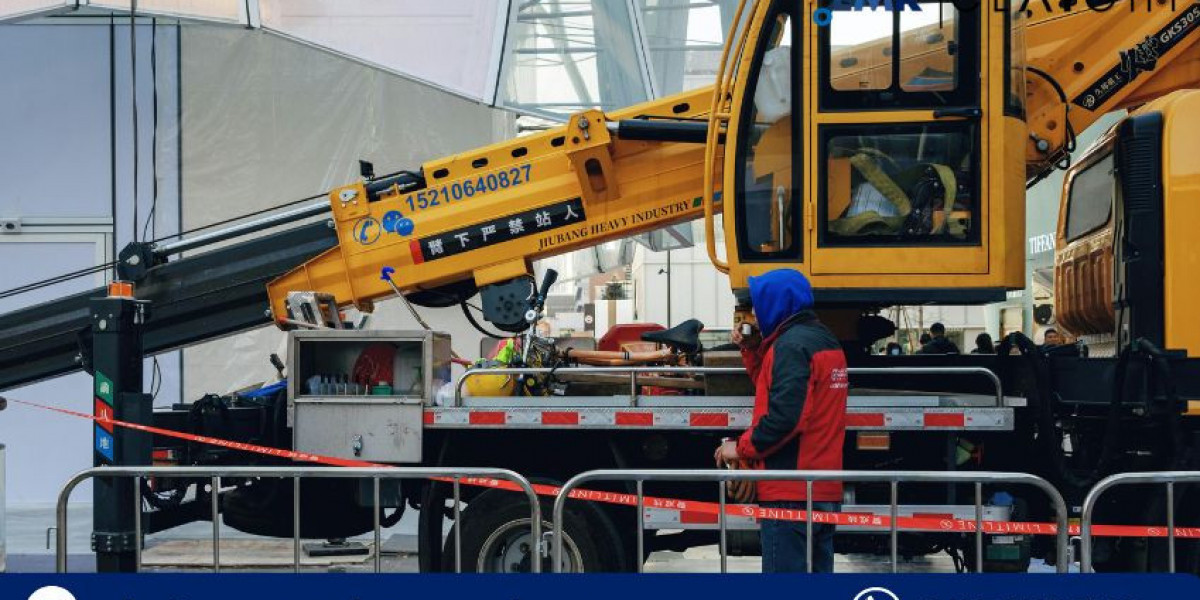
Heavy Construction Equipment Market Overview
The global heavy construction equipment market is a cornerstone of infrastructure development, industrial expansion, and economic growth. In 2025, the market reached a value of approximately USD 216.24 billion, reflecting strong demand across sectors such as construction, mining, and public works. The market is projected to grow at a CAGR of 6.20% between 2026 and 2035, reaching nearly USD 394.62 billion by 2035.
Heavy Construction Equipment Market includes a wide range of machinery such as excavators, loaders, bulldozers, cranes, and dump trucks. These machines are essential for large-scale projects, enabling efficiency, productivity, and cost-effectiveness in operations.
Heavy Construction Equipment Market Outlook
The outlook for the heavy construction equipment market remains highly positive, driven by rapid urbanization, industrialization, and increasing government investments in infrastructure development. Emerging economies, particularly in Asia Pacific and Latin America, are witnessing significant growth due to large-scale construction projects and expanding transportation networks.
In developed regions, the market is supported by the modernization of existing infrastructure, adoption of advanced technologies, and growing demand for sustainable construction practices. The shift toward automation and electrification is also reshaping the industry, enhancing efficiency and reducing environmental impact.
Furthermore, the increasing focus on smart cities and renewable energy projects is expected to create new opportunities for heavy construction equipment manufacturers.
Market Trends
Several key trends are shaping the global heavy construction equipment market:
. Shift Toward Electric and Hybrid Equipment
Environmental concerns and stricter emission regulations are driving the adoption of electric and hybrid construction machinery.
. Integration of Automation and AI
Advanced technologies such as artificial intelligence, machine learning, and telematics are being integrated into equipment to improve productivity and safety.
. Growth of Rental Equipment Market
Many companies prefer renting equipment instead of purchasing, reducing capital expenditure and maintenance costs.
. Focus on Sustainability
Manufacturers are developing energy-efficient machines and using eco-friendly materials to meet sustainability goals.
. Increasing Use of IoT and Telematics
Connected equipment enables real-time monitoring, predictive maintenance, and improved fleet management.
Get a free request sample report
Drivers of Growth
The heavy construction equipment market is driven by several key factors:
. Infrastructure Development
Governments worldwide are investing heavily in infrastructure projects such as roads, bridges, airports, and railways.
. Urbanization and Population Growth
Rapid urban expansion is increasing demand for residential and commercial construction.
. Growth of Mining and Energy Sectors
Rising demand for minerals and energy resources is driving the need for heavy equipment in mining operations.
. Technological Advancements
Innovations in equipment design and functionality are improving efficiency and reducing operational costs.
. Expansion of Construction Industry
The global construction industry continues to grow, creating sustained demand for heavy machinery.
Market Segmentation
Breakup by Type
Earth Moving Equipment
Heavy Construction Vehicles
Material Handling Equipment
Others
Earth moving equipment dominates the market, as it is essential for excavation, grading, and site preparation. Heavy construction vehicles and material handling equipment also play a critical role in large-scale projects.
Breakup by Application
Heavy Lifting
Material Handling
Transportation
Excavation and Demolition
Tunneling
Recycling and Waste Management
Others
Excavation and demolition applications account for a significant share, followed by material handling and transportation. The growing emphasis on recycling and waste management is also contributing to market growth.
Breakup by End Use
Mining
Infrastructure
Forestry and Agriculture
Construction and Manufacturing
Vehicle Transport
Public Works
Others
The infrastructure and construction sectors dominate the market, driven by large-scale development projects. Mining is another key segment, requiring specialized equipment for resource extraction.
Breakup by Propulsion
ICE (Internal Combustion Engine)
Electric
ICE-powered equipment currently dominates the market, but electric machinery is gaining traction due to environmental regulations and advancements in battery technology.
Breakup by Power Output
<100 HP
101–200 HP
201–400 HP
>400 HP
Equipment in the 201–400 HP range holds a significant share, offering a balance between power and efficiency. High-power equipment (>400 HP) is used in heavy-duty applications such as mining and large infrastructure projects.
Breakup by Engine Capacity
<5L
5–10L
>10L
Medium engine capacity (5–10L) dominates the market, while larger engines are used for high-performance equipment.
Breakup by Region
North America (United States, Canada)
Europe (United Kingdom, Germany, France, Italy, Others)
Asia Pacific (China, Japan, India, ASEAN, Australia, Others)
Latin America (Brazil, Argentina, Mexico, Others)
Middle East and Africa (Saudi Arabia, UAE, Nigeria, South Africa, Others)
Asia Pacific leads the market due to rapid urbanization and infrastructure development in countries like China and India. North America and Europe also hold significant shares, supported by advanced technologies and established construction industries.
Key Players
The global heavy construction equipment market is highly competitive, with several major players focusing on innovation, product development, and strategic partnerships. Key companies include:
Caterpillar Inc.
Komatsu Ltd.
Deere & Company
AB Volvo
Hitachi Construction Machinery Co., Ltd.
Liebherr-International AG
CNH Industrial N.V.
SANY
XCMG Group
Doosan Infracore Co., Ltd.
Kobelco Construction Machinery Co., Ltd.
Others
These companies are investing in research and development, expanding their global footprint, and adopting digital technologies to maintain a competitive edge.
Challenges and Opportunities
Challenges
. High Initial Investment
Heavy construction equipment requires significant capital investment, which can limit adoption among small and medium enterprises.
. Fluctuating Raw Material Prices
Variations in steel and other raw material costs can impact manufacturing expenses.
. Environmental Regulations
Strict emission standards require continuous innovation and compliance, increasing costs.
. Skilled Labor Shortage
Operating advanced machinery requires skilled personnel, which can be a constraint in some regions.
Opportunities
. Electrification of Equipment
The shift toward electric machinery offers opportunities for innovation and sustainability.
. Growth in Emerging Markets
Developing economies present significant growth potential due to infrastructure expansion.
. Adoption of Automation
Autonomous and semi-autonomous equipment can improve efficiency and reduce labor dependency.
. Infrastructure Investments
Government initiatives and public-private partnerships are driving demand for construction equipment.
Market Forecast
The global heavy construction equipment market is expected to grow steadily, reaching approximately USD 394.62 billion by 2035, at a CAGR of 6.20%.
This growth will be driven by increasing infrastructure investments, technological advancements, and the expansion of the construction and mining industries. The market is also likely to benefit from the adoption of sustainable and energy-efficient equipment.
In the long term, the industry is expected to witness significant transformation, with digitalization, automation, and electrification playing a key role in shaping the future of heavy construction equipment.
FAQs
1. What is driving the growth of the heavy construction equipment market?
The market is driven by infrastructure development, urbanization, technological advancements, and growth in the construction and mining sectors.
2. Which segment dominates the market?
Earth moving equipment dominates due to its widespread use in construction and excavation activities.
3. What are the key trends in the market?
Key trends include electrification, automation, IoT integration, and the growth of equipment rental services.
4. What challenges does the market face?
Challenges include high costs, environmental regulations, fluctuating raw material prices, and skilled labor shortages.
5. What is the future outlook for the market?
The market is expected to grow significantly, reaching USD 394.62 billion by 2035, driven by innovation and increasing global demand.
Read More Artical:
Germany Big Data Analytics in Retail Market
Latin America Jewellery Market
About Us:
Expert Market Research is a global market intelligence and consulting platform by Claight delivering data-driven insights across commodities, chemicals, energy, and industrial markets. We design our research to support businesses, analysts, investors, and procurement teams in understanding price trends, supply-demand dynamics, competitive landscapes, gaining competitive intelligence, benchmarking best practices, and developing long-term market outlooks.
Our robust research methodologies, combined with validated primary and secondary data, ensure accuracy, consistency, and relevance. Our analysis is widely used not only for strategic planning, market-entry assessments, and sourcing decisions, but also for investment evaluation across international markets. Our strong emphasis on transparency, factual reporting, and regular data updates to reflect real-time market conditions always keeps you ahead of the curve.
Media Contact
Company Name: Claight Corporation
Contact Person: Deepanshu Choudhary, Business Consultant
Email: [email protected]
Toll-Free Number: US +1-415-325-5166 | UK +44-702-402-5790
Address: 30 North Gould Street, Sheridan, WY 82801, USA
Website: www.expertmarketresearch.com