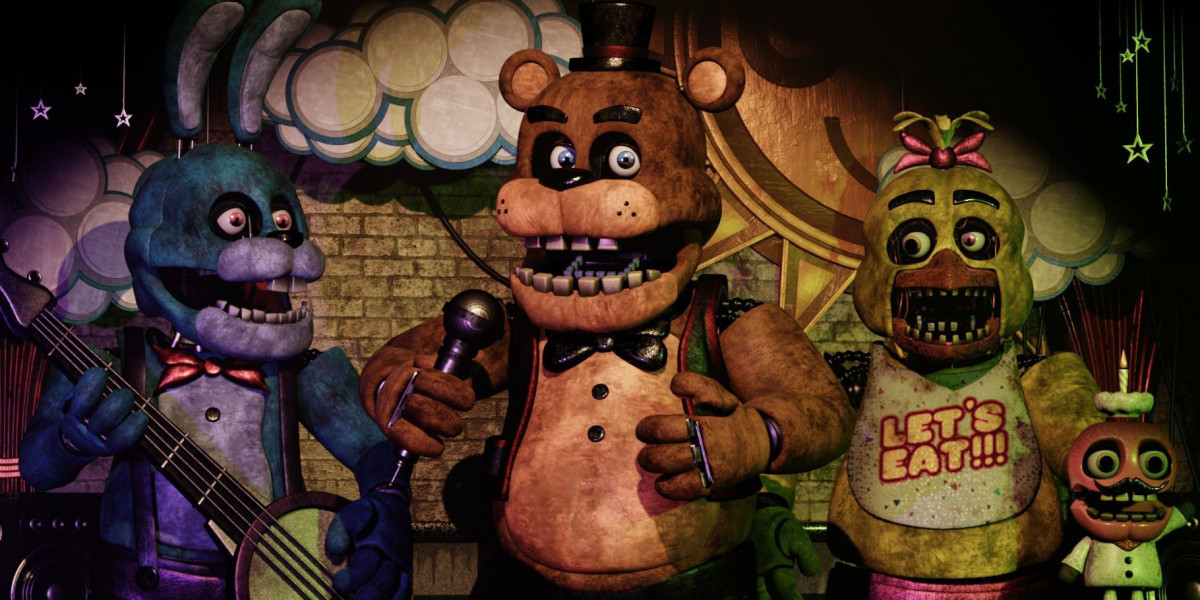
And that's where Five Nights At Freddy's comes in. While not a traditional "store management" game in the Coffee Tycoon sense, it cleverly utilizes management principles to create a unique and terrifying experience. Think of it as managing the safety and security of a late-night establishment...under extreme duress.
This article isn't about selling you on the genre. It's about understanding how these games, even the scariest ones, work and how to approach them to have the most engaging experience. So, let's dive into the creepy, animatronic-filled world of management gaming!
Gameplay: Managing Fear in a Nightmarish Pizzeria
At its core, Five Nights At Freddy's (FNAF) is a game of resource management and strategic response. You play as a security guard working the night shift at Freddy Fazbear's Pizza, a seemingly innocuous children's entertainment venue. However, the animatronic characters roaming the pizzeria at night aren't quite as friendly as they appear during the day. Your job is to survive from midnight to 6 AM (approximately 8 minutes of real-time) by monitoring security cameras and using limited power to control doors and lights.
Here’s a breakdown of the key gameplay elements and how they relate to management concepts:
Resource Management (Power): You have a limited power supply for the entire night. Each time you use the doors or lights, you drain the power. Run out of power, and the animatronics will have a much easier time reaching you. This is akin to managing a budget in a traditional store management game. You need to carefully consider the cost (power consumption) of each action. Are those flashing lights really necessary, or can you rely on the camera feed?
Risk Assessment and Mitigation: The animatronics have distinct movement patterns. Chica heads to the kitchen, Bonnie lurks near the West Hall corner, Freddy bides his time in the dark. Learning these patterns and predicting their movements is crucial. This mirrors risk management in real-world stores. What's the probability of a certain event (e.g., an animatronic approaching your door)? How can you minimize the potential damage (e.g., by closing the door just in time)?
Observation and Information Gathering (Security Cameras): The security cameras are your eyes and ears. They provide information about the location of the animatronics, allowing you to anticipate their next move. This is equivalent to tracking inventory levels, monitoring customer flow, or analyzing sales data in other store management games. The quality of your information directly impacts your decision-making.
Strategic Action (Doors and Lights): The doors and lights are your primary defenses. Closing a door blocks an animatronic from entering your office, but it consumes power. The lights allow you to see if an animatronic is right outside your door, helping you decide whether to close it. These are analogous to marketing campaigns, staffing adjustments, or even security measures in a standard store management game. You're making tactical decisions based on the information you have to protect your "store" (your office) from threats.
Time Management: You only have six hours, but each hour feels like an eternity when a possessed animatronic is breathing down your neck. Efficiently switching between cameras, reacting to threats, and conserving power requires careful time management. This is similar to managing a store's daily operations, ensuring everything runs smoothly before closing time.
Tips for Surviving the Night (and Enjoying the Game):
Learn the Animatronics' Patterns: This is the most crucial piece of advice. Each animatronic has its own unique behavior. Observe them carefully, learn their routes, and anticipate their movements. Knowledge is your most powerful weapon.
Conserve Power: Every action counts. Don't leave the doors closed unnecessarily, and only use the lights when absolutely needed. Remember, you're on a tight budget!
Prioritize Threats: Some animatronics are more dangerous than others. Focus on mitigating the biggest threats first. In the original FNAF, Freddy becomes particularly aggressive later in the game, so keeping an eye on him is crucial.
Listen Carefully: The audio cues in FNAF are just as important as the visual cues. You can often hear the animatronics moving around, even if they're not visible on the cameras. Listen for footsteps, breathing, or other telltale sounds.
Don't Panic: It's easier said than done, but panicking will only lead to mistakes. Take a deep breath, assess the situation, and make a rational decision. Remember, you're in charge, even if it doesn't feel like it!
Experiment: Don't be afraid to try different strategies. Sometimes, the most effective approach is the one you least expect. The beauty of these games is the freedom to learn and adapt.
Understand the Lore (If You're Interested): FNAF has a surprisingly complex and engaging backstory. Exploring the lore can add another layer of depth to the game and make the experience even more immersive.
Conclusion: Management Games – From Coffee Shops to Creepy Pizzerias
Even though Five Nights At Freddy's uses a horror setting, it highlights the core principles of resource management and strategic decision-making found in many store management games. The pressure of limited resources, the constant threat of failure, and the need to adapt to changing circumstances create a compelling and engaging experience.
So, whether you're running a virtual coffee shop or trying to survive the night in a haunted pizzeria, remember to learn the rules, manage your resources wisely, and, above all, don't panic. Happy gaming!