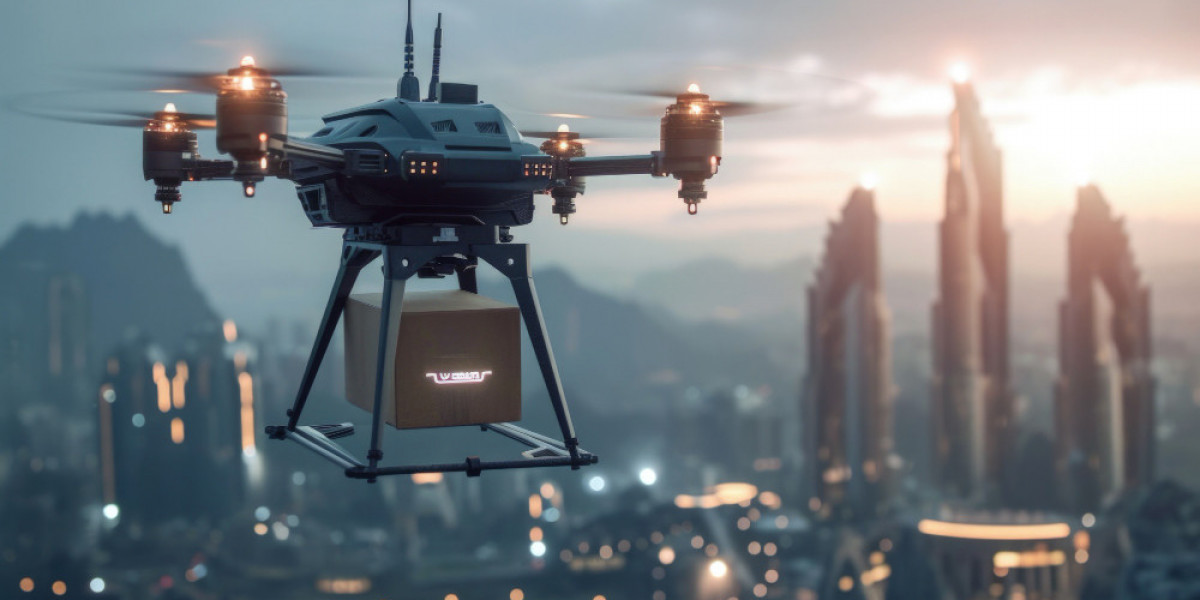
The Factory Floor Doesn't Look Like It Used To
Walk into a modern American manufacturing plant today and you'll notice something immediately — it's quieter than you'd expect. Not because production has slowed down. Quite the opposite. The machines are faster, the lines are more precise, and there are fewer people standing at stations catching errors by hand.
That shift didn't happen overnight. It's the result of years of investment in AI in industrial automation, and for US manufacturers, it's become less of a competitive edge and more of a survival requirement. Companies that haven't started this transition are already behind. The ones that embraced it early? They're running circles around their competitors.
This isn't a story about robots replacing humans. It's a story about what happens when intelligent systems do the repetitive, dangerous, and data-heavy work — and humans do what they've always done best: solve problems, build relationships, and make judgment calls.
What AI in Industrial Automation Actually Means on the Ground
There's a lot of buzzword fog around this topic, so let's cut through it.
AI in industrial automation refers to the use of machine learning, computer vision, predictive analytics, and real-time data processing to manage, monitor, and improve manufacturing and industrial operations. It's not just programming a robot arm to weld the same point 10,000 times. It's teaching a system to detect when that weld is slightly off-spec before it causes a downstream failure. It's building lines that adapt.
Here's where it gets interesting for US manufacturers specifically. Labor costs in America are high — that's not a complaint, it's a reality. Automation has historically been the answer, but dumb automation (scripted machines doing fixed tasks) has ceiling. AI removes that ceiling. Systems learn, optimize, and improve without being reprogrammed every time something changes.
Predictive Maintenance Alone Is a Game-Changer
One of the most immediate wins companies see is in maintenance. Traditional maintenance schedules are either reactive (fix it when it breaks) or preventive (service it on a calendar). Both waste money in different ways.
AI-driven predictive maintenance uses sensor data — vibration, temperature, acoustics, power draw — to identify when a machine is trending toward failure before it gets there. A conveyor motor starts running 3% hotter than its baseline. An AI system flags it two weeks before it seizes. The repair is scheduled during planned downtime, not during a production run.
US manufacturers using predictive maintenance report anywhere from 20–40% reductions in unplanned downtime. In a high-volume facility, that translates to millions of dollars annually.
Quality Control That Never Blinks
Human inspectors are good. AI-powered vision systems are relentless. They don't get tired at hour seven of a shift. They don't miss a micro-fracture on part number 94,000. They flag it, log it, and keep moving.
Computer vision integrated into production lines can inspect at speeds and tolerances no human team can match. For industries like aerospace, medical devices, and automotive — where defects carry serious consequences — this isn't optional anymore. It's baseline.
The Defense Sector Connection Most People Miss
Here's a thread that doesn't get pulled often enough in manufacturing conversations: the relationship between defense technology and industrial AI.
The US defense industry has been pouring investment into autonomous systems, and a lot of that research bleeds into commercial industrial applications. The development of a military drone swarm — coordinated groups of autonomous drones that communicate and operate as a unified system — has pushed breakthroughs in multi-agent AI, real-time path planning, and decentralized decision-making.
Those same principles now show up in warehouse logistics, where fleets of autonomous vehicles coordinate without central control. They show up in distributed sensor networks on factory floors. They show up in the edge computing architectures that make real-time AI decisions possible without cloud latency.
Defense investment effectively subsidizes civilian AI capability. That's been true for decades — GPS, the internet, touchscreens all have defense origin stories — and AI in industrial automation is the latest chapter.
Drone Defense Tech and the Smart Factory Overlap
The overlap runs even deeper when you look at drone swarm defense systems, which are built to detect, track, and neutralize incoming drone threats autonomously. Building systems that can identify dozens of fast-moving, unpredictable targets in real-time and make split-second decisions is an extraordinarily hard AI problem.
Solving it requires advances in sensor fusion, edge inference, and autonomous decision-making under uncertainty. Every one of those advances has a direct analog in industrial AI — detecting anomalies across hundreds of sensors simultaneously, making real-time quality decisions without sending data to the cloud, and handling unexpected scenarios without human intervention.
The US is investing heavily in both tracks. And smart manufacturers are paying attention to where defense tech goes, because it reliably signals where industrial AI is heading next.
Where US Manufacturers Should Focus Right Now
Start with data infrastructure. AI is only as good as the data feeding it. Most older facilities are running equipment that doesn't natively produce useful data. Retrofitting sensors and building data pipelines isn't glamorous, but it's foundational.
Don't automate chaos. If a process is poorly defined, automating it makes the mess faster. Clean up workflows before layering AI on top. The manufacturers who get the best ROI from AI are the ones who did process discipline work first.
Invest in your people alongside the tech. The fear that AI eliminates jobs is overstated for most manufacturers. The reality is role transformation. Technicians who understand AI systems are in high demand. Training existing workers to operate and maintain AI-driven lines is a competitive advantage, not a cost.
Pilot fast, scale deliberately. The worst AI implementations are the ones that tried to boil the ocean. Pick one line, one process, one problem. Prove the value. Then scale it.
The Manufacturers Who Wait Will Pay the Price
The US manufacturing sector is in a genuine renaissance right now. Reshoring, supply chain restructuring, and domestic investment are creating real opportunity. But that opportunity has a technical floor — companies that can't operate competitively on cost and quality will lose out to those that can.
AI in industrial automation is how you meet that floor and build above it. The technology isn't experimental anymore. It's deployed, proven, and improving every month.
The factories that will define American manufacturing for the next 20 years are being built — or rebuilt — right now. The question isn't whether AI belongs on the factory floor. It's whether your facility will be part of that story.
Ready to explore what AI-driven automation could do for your operation? Start with a process audit. Find your highest-cost inefficiency, map the data you'd need to address it, and talk to an industrial AI specialist. The first step is simpler than most manufacturers expect — and the results speak for themselves.