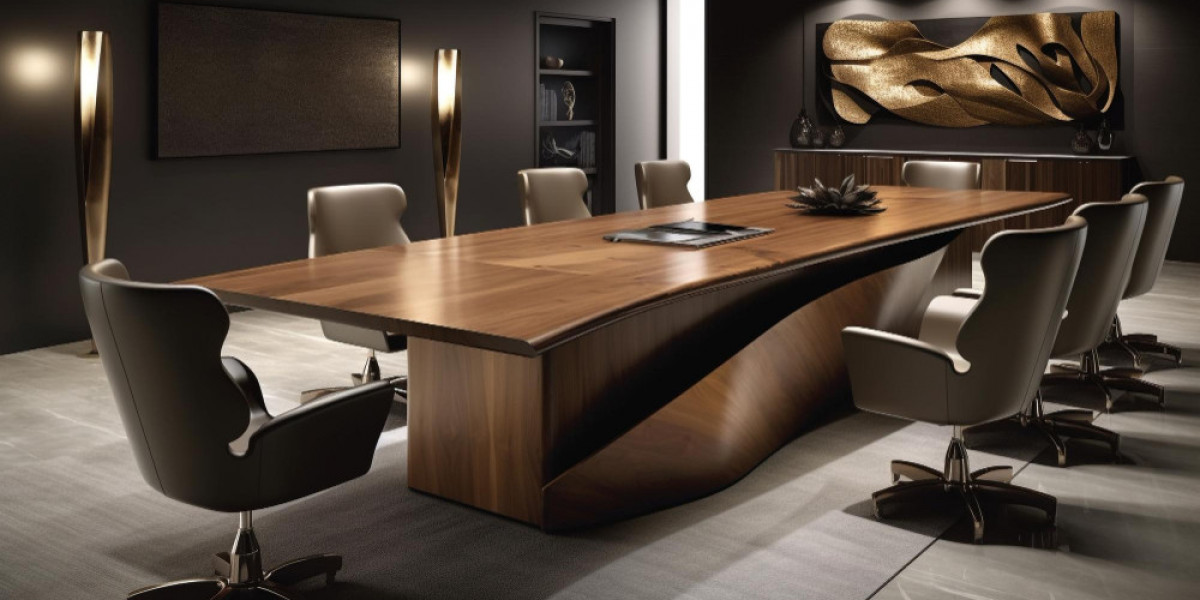
Your Office Is Saying Something About Your Business — What Is It Saying?
Walk into any office in the US and within thirty seconds you've formed an opinion about the company. The furniture, the layout, the materials, the way it all fits together — it communicates something before a single word is spoken. It tells clients whether this is a serious operation or an afterthought. It tells employees whether leadership values the environment they spend eight-plus hours a day in. It tells candidates whether this is a place worth their talent.
Most businesses understand this intellectually. Far fewer act on it with any real intention. They buy whatever was available at the nearest office furniture retailer, arrange it in the most obvious configuration, and wonder why the space never quite feels like them.
Custom office furniture solves that problem at the root. Instead of adapting your business to furniture that was designed for no one in particular, you build furniture that was designed specifically for you — your dimensions, your workflow, your brand, your people.
This blog walks through how to think about that investment strategically, so you get it right the first time.
Why Off-the-Shelf Almost Never Fits
The Dimensions Problem
Standard office furniture is designed around assumptions — standard ceiling heights, standard room configurations, standard desk depths. Your office almost certainly doesn't match those assumptions exactly. The result is furniture that fits in the technical sense — it goes through the door and sits on the floor — but doesn't actually work with the space. Awkward gaps. Wasted corners. Rooms that feel smaller than they are because the furniture is fighting the architecture instead of working with it.
Custom office furniture eliminates this problem entirely. Every piece is designed for the specific dimensions of your space, which means you can actually use the room you have — including the corners, the alcoves, the wall runs that standard furniture never quite reaches.
The Brand Coherence Problem
Your brand has visual language — colors, materials, typography, a general aesthetic direction. Your office should reflect that language. When a client walks into your space, the environment should feel like an extension of the same thinking that went into your website, your presentations, your communications. That kind of environmental brand coherence isn't accidental. It requires furniture that was either chosen with exceptional intentionality or built to spec.
Off-the-shelf options give you limited control over finishes, materials, and configurations. You pick from what's available. Custom gives you the starting point of a blank canvas and the ability to make choices that align with exactly who you are as a business.
The First Impression Piece: Getting Your Reception Area Right
Why the Reception Area Deserves the Most Attention
If there's one area of any office that has disproportionate impact on perception, it's the reception area. This is where clients, candidates, vendors, and partners form their first impression of your business. It's the physical equivalent of a handshake — and like a handshake, it sets the tone for everything that follows.
A Modern reception desk done well communicates competence, warmth, and intentionality simultaneously. It's not just a functional piece where a receptionist sits — it's a statement about how the company sees itself and how it wants to be seen. The height, the material, the finish, the way it interacts with the surrounding space — all of it contributes to that statement.
The mistake most companies make is treating the reception desk as a utilitarian purchase rather than a strategic one. They buy something that technically serves the function and move on. The companies that get this right — that invest in a well-designed, properly scaled, brand-aligned reception piece — consistently find that it changes how visitors experience the entire office.
What to Consider When Designing a Reception Area
Scale is the first consideration. A reception desk that's too small for the space looks lost. One that's too large feels oppressive. Getting the proportions right requires knowing the exact dimensions of the room and designing the piece in relationship to those dimensions — which is exactly what custom fabrication allows.
Material and finish come next. The choices here range widely: solid wood in various species and stains, lacquered surfaces in brand colors, metal accents in brushed or polished finishes, stone or concrete elements for an industrial-modern aesthetic, integrated lighting for drama and warmth. Each combination tells a different story about the company.
Finally, functionality matters more than it sometimes gets credit for in design conversations. The reception desk needs to actually work — appropriate height for the receptionist, adequate storage, cable management for technology, clear sightlines to the entrance. Custom office furniture lets you optimize all of these functional requirements without compromising the aesthetic result.
Designing for Focused Work: The Studio Environment
The Challenge of the Creative or Professional Studio
Not all offices are the same. A law firm has different spatial and functional needs than a design studio, which has different needs than a financial advisory practice. The creative or professional studio environment presents particular challenges — you need space for focused individual work alongside areas for collaboration, review, and presentation, all within what is often a relatively compact footprint.
Custom studio office furniture addresses these challenges with a specificity that catalogue solutions simply can't match. Studio-specific pieces might include extra-deep work surfaces for large-format projects, integrated monitor arms at multiple heights, custom shelving configured for specific storage needs, mobile pieces that can be reconfigured quickly as the work requires, and acoustic panels built into furniture elements to manage sound in open environments.
The result is a workspace that actively supports the kind of work being done in it — not a generic office that the team has learned to work around.
Ergonomics as a Design Principle, Not an Afterthought
One of the most valuable aspects of custom office furniture for any intensive work environment is the ability to build ergonomic principles into the furniture design itself rather than bolting them on afterward. Standard desks come at standard heights. Custom desks can be built at whatever height your specific team — with their specific heights and working styles — actually needs.
Adjustable height surfaces, properly positioned monitor placement, adequate knee clearance, appropriate reach zones — these are all parameters that can be designed in from the beginning rather than improvised with aftermarket accessories. The ergonomic benefit isn't just employee wellbeing, though that matters. It's productivity. People do better work when they're not physically uncomfortable.
The Business Case for Custom: What the Numbers Actually Say
Longevity Versus the Replacement Cycle
Here's the financial reality that the custom versus standard debate often glosses over: good custom office furniture, built from quality materials with proper construction, lasts significantly longer than standard commercial furniture. The replacement cycle for off-the-shelf office furniture in a typical US office environment is somewhere between five and ten years, often less for high-use pieces. Well-made custom pieces routinely last twenty years or more.
When you spread the cost of a custom investment over that lifespan and compare it to multiple rounds of standard furniture purchasing, the economics often favor custom — particularly when you factor in the disruption cost of re-furnishing and the value of having a space that actually supports productivity throughout that period.
The Productivity and Retention Angle
There's a body of evidence in workplace design research suggesting that the quality of the physical work environment meaningfully affects employee productivity, satisfaction, and retention. In a US labor market where talent acquisition and retention carry real costs — recruiting fees, onboarding time, the loss of institutional knowledge when experienced people leave — the contribution of a well-designed workspace to retention is a legitimate financial variable.
Custom office furniture contributes to this in ways that standard furniture typically doesn't — not just because it looks better, but because it's designed to support the actual way people work in that specific environment.
Working With a Custom Furniture Maker: What to Expect
The Design Conversation
The process of creating custom office furniture starts with a design conversation that's quite different from walking into a showroom. A good maker will want to understand your space in detail — dimensions, lighting, architectural features, traffic flow — and your business in broader terms — brand identity, company culture, how the space gets used, how it might need to evolve.
That conversation is where the value gets built. The more clearly you can articulate what you need and what you're trying to express, the better the result will be.
Timeline and Budgeting Realities
Custom fabrication takes time. A typical project from initial design to delivery and installation ranges from six to twelve weeks depending on complexity, materials, and the maker's production schedule. Factor this into your planning — particularly if you have a lease start date, a client event, or another hard deadline driving your timeline.
Budgeting for custom office furniture varies widely based on materials, complexity, and scale. The honest framing is that you're paying for design work, skilled fabrication, and materials of specified quality — not for the most economical way to fill a space. The investment is real, and the results, done right, justify it.
Ready to Build Something That Actually Fits Your Business?
Your office doesn't have to look like every other office. It doesn't have to fight your space, contradict your brand, or make your team work around its limitations. Custom office furniture gives you the ability to build an environment that's genuinely designed for your business — your dimensions, your workflow, your identity.
Connect with a custom furniture maker today. Bring your space measurements, your brand guidelines, and a clear picture of how you work — and start building something that reflects the business you've actually built.