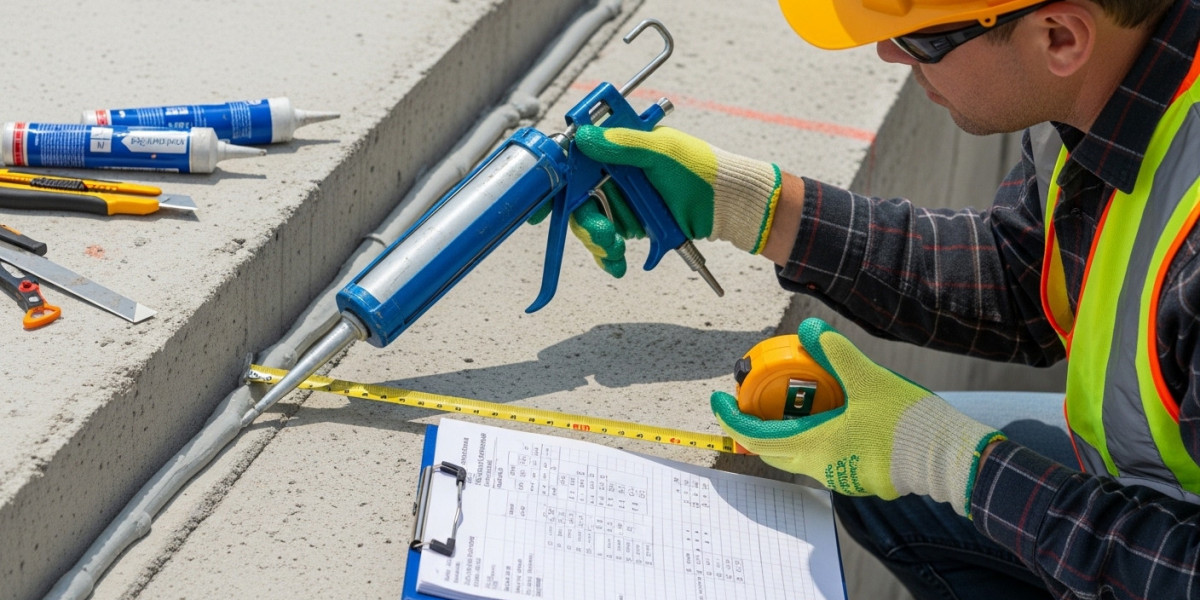
The concrete looks like it's permanent and solid, but in reality, the material moves more than you think. All of these factors, including temperature variations, moisture content, shifting structures, and structural movement, can cause cracks or joints to need sealing. It is here that concrete caulk becomes useful. It extends the durability of parking decks and structures and protects slabs.
However, understanding how to apply caulk does not suffice. Contractors, estimators, or project managers will find it difficult to calculate concrete caulk with accuracy. An error in calculating the amount of concrete caulk or labour estimates can cause major cost increases. Underestimating material costs can delay projects. An overestimation can lead to a reduction in profit margins.
It's not a matter of guesswork. Measuring joint dimensions and understanding product output, along with calculating the waste factors as well as factoring in the labour productivity, are all part of this process. No matter if you are quoting a small residential project or a major commercial joint expansion sealing job, using a structured method will help to ensure that your business is profitable. Measuring properly is key to accurate estimates. Skip this stage, and you'll get numbers that are unreliable.
Measuring the Total Linear Feet
Then, start by measuring each crack and joint. Use a calliper or construction drawings. Add up all joint measurements to get the total length in linear feet. Use the example below:
- Driveway circumference joints: 120 feet
- Control joints: 180 feet
- Expansion joints: 60 feet
Total = 360 linear feet
Measuring Joint Depth and Width
Joint dimensions have a direct impact on material quantities. Measure:
- Size in Inches
- Depth (inches)
Some sealant makers recommend a 2:1 ratio for the thickness to width. Consider the following:
- A 1-inch wide joint
- 0.5-inch deep sealant
Add Waste Factor
You should always add an extra 5 to 10% for:
- Overfilling
- Surface irregularities
- Application errors
To be on the safe side, 10 per cent is recommended for commercial projects larger than $10,000.
How To Estimate The Price Of Concrete Caulk?
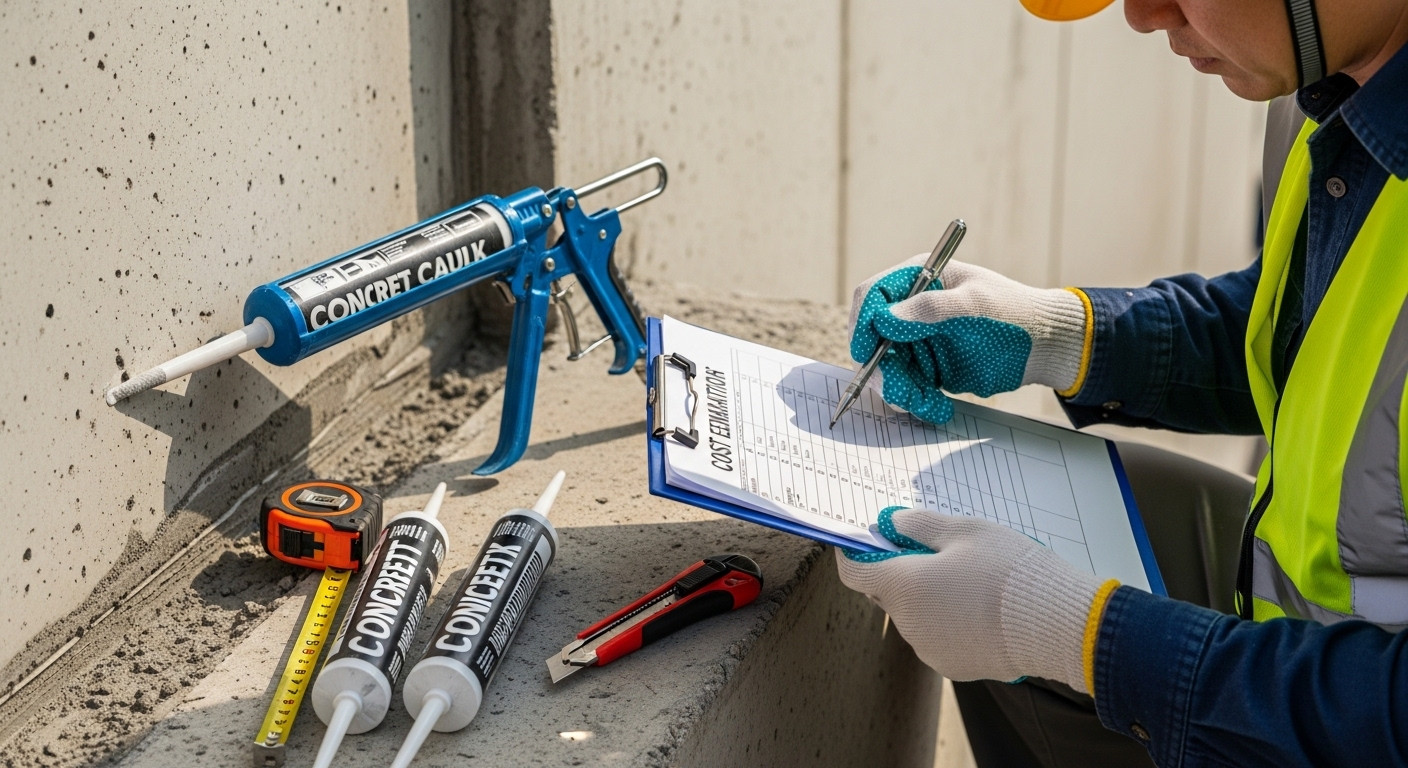
Estimating the material quantity only represents a small part of the overall process. Price is affected by multiple factors.
In larger projects, professional estimators often rely on specialised support such as usa estimating services to ensure material takeoffs, labour projections, and overhead calculations are aligned with current market conditions. This becomes especially important when bidding on commercial or government projects where precision matters.
Material Cost
Sealants are available in a variety of types and brands. Polyurethane typically costs more than Acrylic Latex. Self-levelling materials also tend to be more expensive due to their complex formulation.
Labor Productivity
Most often, the cost of labour is highest. Productivity depends on:
- Joint accessibility
- Surface preparations
- Weather conditions
- Crew experience
A skilled worker can seal an average of 100-250 linear feet per minute, depending on size and complexity.
Surface Preparation
As part of proper preparation, you may need to:
- Cleaning debris
- Old sealant can be removed
- Installing the Backer Rod
- Priming surfaces labour.
All of these activities add time and cost to your labour.
Tool and Equipment
Include cost for:
- Caulking guns
- Bulk dispensing machines
- Grinding tools
- Compressors for air are also known as Air compressors.
It is important to include in your estimate the cost of wear and tear on your equipment.
Concrete Caulk Reference Table
A general guide is provided below for the standard 10-ounce tube.
Joint Width (inches) | Joint Depth (inches) | Approx. Linear Feet per Tube |
0.25 | 0.25 | 288 feet |
0.5 | 0.25 | 144 feet |
0.5 | 0.5 | 72 feet |
0.75 | 0.5 | 48 feet |
1 | 0.5 | 36 feet |
This is an estimate. Never rely on manufacturer specs.
Calculate crew Production Rate
Determine:
- Total Linear Footage
- Average number of sealed feet per hour
- Crew size
Example:
This is the total length of 1,000 feet
Productivity is 200 feet per minute
Five hours of work are required.
Total labour cost can be calculated by multiplying the number of crew members by their rate.
Include the time for Setup, Cleanup, and Transportation
Add Time to the:
- Mobilization
- Masking surfaces
- The cleaning of tools
- Final inspection
Additional labour may be required for 10 to 20 per cent of the time.
Caulk use is affected by a number of factors
Concrete caulk is affected by a variety of real-world factors.
- Even joint edges can increase material usage
- If you have deeper joints than normal, a rod backer is needed.
- The sealant is absorbed by highly porous cement
- Cold weather slows down productivity
- Vertical joints are different and may need to be applied differently
The bids that are inaccurate will result if these variables are ignored.
Common Mistakes
Even experienced estimators make errors. Common mistakes that you should avoid
- Ignoring joint depth requirements
- Forgetting to waste the allowance
- Miscalculating labor setup costs
- Not accounting for the backer rod
- You may be using incorrect coverage rates
The accuracy increases with accurate measurement and realistic product assumptions.
Increase the Accuracy of Your Estimates
These professional practices will help you achieve consistent results.
- Look at the drawings closely
- If possible, conduct site visits
- Confirmation of joint specifications
- Use manufacturer coverage charts
- Examine the actual usage of materials in past projects
The ability to keep historical information allows for more accurate future forecasts and increased profitability.
How to estimate concrete caulk for large commercial projects?
In commercial projects, the approach must be structured. Estimators use architectural and structural plans to create joint schedules instead of counting individual flaws.
Divide your project into separate sections.
- Horizontal slab joints
- Vertical wall joints
- Perimeter sealing
- Control and extension joints
Then, separately calculate each section's quantities. This reduces errors when you present your proposals to the client. Coordination with project managers and procurement and construction teams is essential for large-scale projects to reflect real-time market prices.
Safety and Compliance
Sealants must meet safety standards. Consider:
- Proper ventilation for indoor projects
- Personal protective equipment
- Environmental regulation
- Manufacturer application guidelines
Project delays or penalties may result from non-compliance.
Conclusion
It is essential for construction professionals to learn how to estimate concrete caulk using reliable concrete estimate. It is crucial to accurately measure linear feet, width, depth, etc. Once the formula is applied, it ensures accurate calculations.
A successful estimation includes not only the materials but also labour productivity. Small mistakes add up quickly, and this is especially true for large commercial construction projects. Reduce risk by using a structured process and verifying guidelines from the manufacturer.
Concrete caulking is a simple process, but professional estimates require attention to detail as well as real-world experience. This leads to better bids from clients, more satisfied projects and competitive prices.
FAQs
How many linear feet of concrete caulk will I need?
It is determined by the width and thickness of the joints. An average 10-ounce tube covers approximately 72 feet for a 0.5-inch by 0.5-inch joint.
Does it make sense to add waste materials?
Yes. Adding 5-10 percent covers overfill, uneven joints, and minor errors in application.
Does joint depth affect cost?
Absolutely. Deeper joints will require additional sealant or backer bar, which can increase material and labour costs.
How long do concrete caulks last?
On average, polyurethane-based sealants last for 10-20 years. This depends on how they're maintained and the conditions.
Are materials more expensive to buy than labour?
In some cases, absolutely. The largest cost component of any project is usually labour, especially when it comes to joint preparation.