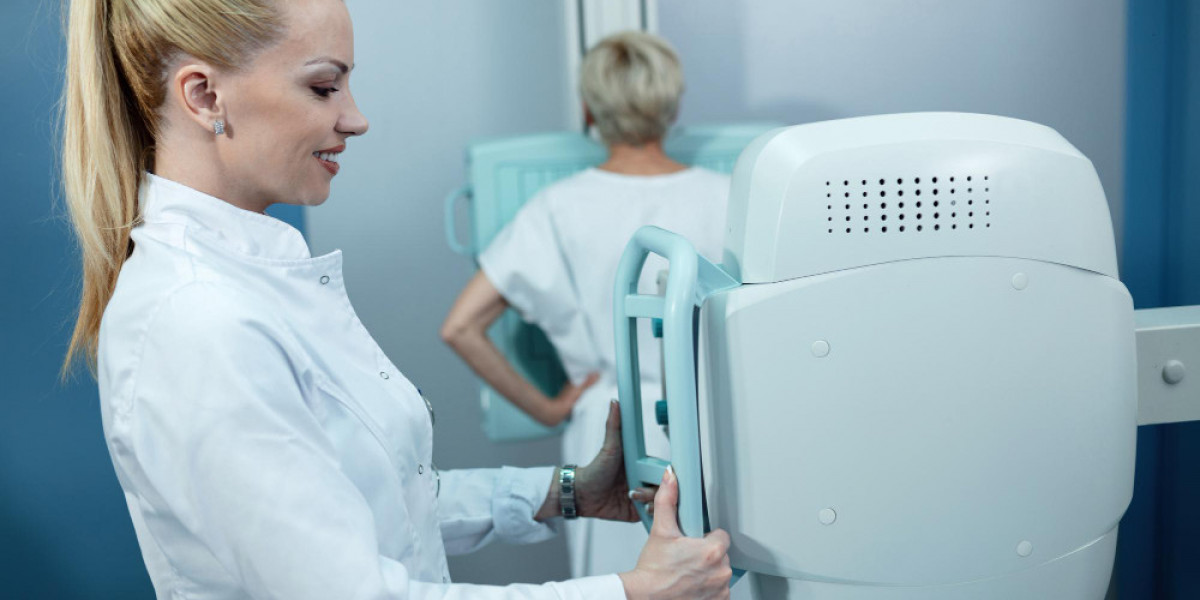
Something Has Been Missing From Breast Imaging for Decades
Mammography has been the cornerstone of breast cancer screening in the United States for more than fifty years. It has saved lives — that's not in question. But if you've ever sat in a waiting room after a callback, held your breath during a biopsy for something that turned out to be nothing, or been told your dense breast tissue made your results harder to interpret, you already know the limitations firsthand.
The imaging technology that most women in the US still receive for routine screening was fundamentally designed around a two-dimensional view of a three-dimensional organ. That constraint has consequences: overlapping tissue obscures findings, compression causes discomfort, and dense breasts — present in nearly half of all women in the US — significantly reduce the reliability of the results.
3D breast CT represents a meaningful departure from that paradigm. It's not an incremental improvement on existing mammography. It's a genuinely different approach to visualizing breast tissue — one that's generating real clinical interest and beginning to change how forward-thinking imaging centers think about what's possible in breast health.
What 3D Breast CT Actually Is
The Technology in Plain Language
The concept behind 3D breast CT is more intuitive than it might sound. Instead of compressing the breast between two plates and capturing a flat image from one or two angles, a dedicated breast CT system captures hundreds of images from different angles as the scanner rotates around the breast. Those images are then computationally reconstructed into a three-dimensional volume that radiologists can examine slice by slice from any orientation.
The breast hangs pendant through an opening in the table — no compression required. The entire scan takes less than ten seconds per breast. The result is a full volumetric dataset of the breast that can be reviewed in multiple planes, with detail that flat projection imaging simply cannot provide.
This matters clinically in ways that go beyond the obvious comfort improvement. Overlapping tissue — the primary source of false positives and false negatives in conventional mammography — is no longer an issue when you can look through the breast from any angle at any depth.
How It Differs From Mammography and Tomosynthesis
Mammography, including 3D mammography (tomosynthesis), still compresses the breast and still produces images that represent a limited range of angles. Tomosynthesis was a genuine advancement over 2D mammography — it reduces the overlap problem meaningfully — but it's still working within the constraints of compression-based imaging.
Dedicated 3D breast CT eliminates compression entirely and captures a true volumetric dataset. The spatial resolution achievable with dedicated breast CT systems is also significantly higher than what whole-body CT provides for breast tissue, which means the technology is designed specifically for the diagnostic demands of breast imaging rather than adapted from general radiology equipment.
For women with dense breasts, implants, or prior biopsies, these differences translate into meaningfully different clinical information — and potentially meaningfully different outcomes.
Why Dense Breast Tissue Changes Everything
The Dense Breast Problem in the US
Dense breast tissue is both common and clinically significant. Approximately 40 to 50 percent of women in the US have dense breasts as measured on imaging, and most US states now require that women be notified if their mammography results indicate dense tissue. The reason that notification matters is twofold: dense tissue increases the risk of breast cancer, and it also reduces the sensitivity of conventional mammography — meaning the very women who most need reliable screening are the ones the standard technology serves least well.
On a mammogram, dense glandular tissue and potential tumors both appear white. A lesion can effectively hide in plain sight within dense tissue — a problem sometimes described as trying to find a snowball in a snowstorm. This is the primary driver of both false negatives (missed cancers) and false positives (unnecessary callbacks and biopsies) in dense breast populations.
3D breast CT addresses the dense tissue problem more directly than any compression-based approach can, because the volumetric imaging separates tissue layers that would otherwise overlap. A finding that would be invisible on a mammogram of dense breast tissue can be clearly visible when viewed in cross-section through a CT volume.
What This Means for Screening Recommendations
Women with dense breasts are often advised to consider supplemental screening — typically ultrasound or MRI — in addition to routine mammography. Both options have limitations: ultrasound is highly operator-dependent and produces significant false positives; breast MRI is extremely sensitive but also expensive, time-consuming, requires intravenous contrast, and is not appropriate for all patients.
3D breast CT offers a potential middle path — more comprehensive than mammography alone for dense breast populations, potentially more practical than breast MRI for routine supplemental screening. The clinical evidence base is still developing, but the early data is generating significant interest among breast imaging specialists.
The Koning Vera: A Dedicated Breast CT Platform
What Makes Dedicated Systems Different
Not all breast CT is created equal. Whole-body CT scanners can image breast tissue, but they weren't designed for it — the spatial resolution, radiation dose optimization, and ergonomic considerations that matter specifically for breast imaging require a dedicated system built for that purpose.
The koning vera 3d breast ct system is one of the dedicated platforms that has received FDA clearance for breast imaging in the United States. It's designed specifically around the clinical and physical requirements of breast CT — including the pendant positioning that eliminates compression, optimized detector geometry for breast tissue characterization, and dose management appropriate for a screening context.
For imaging centers evaluating whether to invest in dedicated breast CT capability, the distinction between a dedicated system and an adapted general-purpose scanner matters significantly in terms of image quality, patient experience, and clinical utility.
Clinical Evidence and FDA Clearance
FDA clearance for breast CT in the US is not a trivial benchmark — it requires demonstrated safety and effectiveness data. The cleared indications and the evidence supporting them are important context for both clinicians making referral decisions and patients trying to understand their options.
It's worth noting that the evidence base for 3D breast CT is still evolving compared to the decades of data behind conventional mammography. This is the nature of emerging imaging technology — clinical integration precedes the long-term outcome data that takes years to accumulate. What currently exists includes promising performance data in specific populations, strong radiologist enthusiasm based on image quality, and a growing body of comparative studies against existing modalities.
The Patient Experience: What to Expect
No Compression, No Breath-Holding Drama
For many women, the most immediate difference between 3D breast CT and conventional mammography is physical. The absence of compression is significant — both in terms of comfort during the scan and in terms of anxiety reduction for women who have found mammography painful or distressing enough to delay or avoid screening.
The procedure itself is brief. You lie face down on a specialized table with the breast positioned pendant through an opening. The scan rotates around the breast in under ten seconds. There's no need to hold an awkward position, no breast compression, and no need to hold your breath. Most women describe it as notably more comfortable than mammography.
What Happens After the Scan
The volumetric dataset produced by breast ct is reviewed by a radiologist trained in breast imaging interpretation. Rather than evaluating one or two projection images, the radiologist can scroll through the breast volume in multiple planes, identify and characterize findings in three-dimensional context, and make better-informed decisions about what requires follow-up and what can confidently be characterized as benign.
This richer information should, over time, translate into fewer unnecessary callbacks, more targeted biopsies, and earlier detection of clinically significant cancers — though the population-level evidence for these outcomes is still being established.
Talking to Your Doctor About 3D Breast CT
Questions Worth Asking
If you're a woman in the US with dense breasts, a personal or family history of breast cancer, or a prior history of inconclusive mammogram results, 3D breast CT is worth a conversation with your healthcare provider. Useful questions to raise include: Am I a candidate for supplemental breast imaging? Is 3D breast CT available at imaging centers near me? How does it compare to MRI for my specific situation? And importantly — will my insurance cover it?
The Insurance Question
Insurance coverage for 3D breast CT is variable in the US and still evolving. As with any emerging technology, coverage often lags behind clinical availability. Some patients may face out-of-pocket costs, particularly for supplemental screening rather than diagnostic imaging following a clinical finding. Understanding the cost landscape before scheduling is practical — and worth the conversation with both your provider and your insurer.
Your Breast Health Deserves the Best Available Imaging
The landscape of breast imaging in the United States is changing. 3D breast CT offers a fundamentally different approach — comprehensive volumetric imaging without compression, with particular promise for women whose breast tissue has historically made standard screening less reliable.
Whether you're approaching routine screening, navigating a callback, or looking for the best supplemental option for dense breasts, it's worth knowing that better options exist and asking for them.
Talk to your healthcare provider today about whether 3D breast CT is right for you. Advocate for the imaging that gives you the clearest possible picture — because your breast health is worth it.